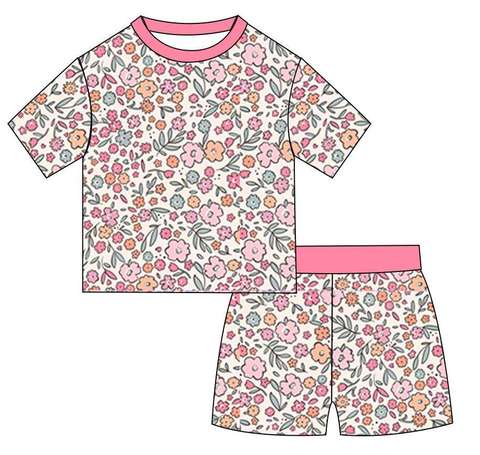
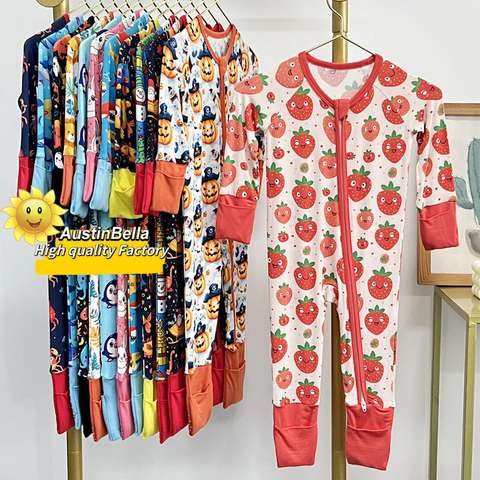
The textile industry is rapidly evolving, with businesses now prioritizing sustainability, comfort, and durability in their products. One such revolutionary innovation is bamboo romper baby pajamas, designed with a focus on eco-friendly fibers, GSM optimization, and high-quality industrial production. This article explores the intricate engineering processes behind bamboo fabric, the importance of fabric density, and the role of industrial-grade machinery in producing superior babywear.
The Science Behind Bamboo Fabric: Sustainable and Soft
Bamboo as a textile material has gained traction in recent years due to its remarkable properties. Extracted from the pulp of bamboo or processed through a chemical treatment into bamboo viscose, this fabric is celebrated for its softness, breathability, and antimicrobial qualities. It's worth noting that while natural bamboo textiles are mechanically processed, most bamboo baby pajamas in the market use bamboo viscose for its luxurious feel and pliability. ### Composition and Properties The appeal of bamboo fabric lies in its unique composition. Bamboo viscose contains cellulose extracted from bamboo pulp, giving it properties similar to cotton and silk. The fibers boast moisture-wicking properties, making them ideal for babywear where breathability and dryness are paramount. Additionally: - The thermal-regulating nature of bamboo fabric helps maintain an optimal body temperature for babies. - Naturally hypoallergenic qualities reduce the likelihood of irritation for sensitive infant skin. - A smooth texture prevents chafing, ensuring all-day comfort. Bamboo romper baby pajamas not only address the demand for biological safety but also position themselves as a premium alternative to synthetic fabrics, aligning with the growing consumer trend for organic and sustainable options.
The Role of GSM in Bamboo Baby Pajamas
When discussing textiles, GSM (grams per square meter) is a critical consideration, especially for babywear. GSM determines fabric density, directly impacting factors like weight, breathability, and durability. Selecting appropriate GSM for bamboo romper baby pajamas ensures both functionality and market competitiveness. ### Optimal GSM for Baby Pajamas For babywear like rompers and pajamas, the GSM must be carefully calibrated to strike a balance between softness, durability, and weight. A GSM range of 180-250 is typically ideal for bamboo-based baby apparel. Here’s how GSM translates to real-world applications: - **Lightweight Fabrics (180-200 GSM):** Suitable for warm climates, this GSM range ensures maximum breathability. Bamboo rompers with this density are airy yet provide sufficient structure for comfortable wear. - **Midweight Fabrics (200-250 GSM):** These fabrics offer better durability and warmth, making them suitable for year-round usage and colder months. - **High-density Fabrics (260+ GSM):** Rare in baby pajamas, such GSM metrics may be ideal for specialized thermal babywear but could compromise the rompers' flexibility and softness. , precision in fabric density not only enhances the function of the product but also ensures sustainability by optimizing material usage and energy consumption during production. ### Consistency in GSM Through Industrial Technology Industrial weaving and knitting play a pivotal role in maintaining consistent GSM across fabric batches. Mills employing modern Jacquard or circular knitting machines are instrumental in ensuring the repeatability and uniformity critical for babywear standards. Coupled with automated GSM testing machines, manufacturers can achieve unparalleled accuracy in fabric density, ensuring that the final product meets stringent client specifications.
Industrial Machinery: Precision Manufacturing for Bamboo Babywear
The production of bamboo romper baby pajamas relies heavily on advanced industrial machinery, with the focus on high-efficiency processes that minimize wastage, improve yield, and ensure exceptional quality. From fiber processing to cutting and sewing, each stage leverages technology to meet the demands of modern production. ### Bamboo Fiber Processing Machinery The journey begins with bamboo fiber processing. Depending on whether manufacturers opt for natural bamboo fibers or viscose bamboo, different types of equipment may be employed: 1. **Mechanical Extraction Machines:** Used in eco-friendly options, these separate bamboo fibers using enzymes and crushing rollers. 2. **Viscose Processing Units:** For bamboo viscose, specialized machinery dissolves, filters, and reconstitutes bamboo pulp into fine filament strands. Advancements in intelligent machinery, integrated with IoT sensors, monitor throughput and process variables like temperature and mix ratios in real-time, ensuring uniformity and efficiency. ### Knitting and Weaving Machines To produce the smooth and stretchable fabric required for bamboo pajama rompers, precision knitting machines are indispensable. Circular weft knitting machines that handle bamboo yarns are often equipped with high-speed spindles to generate soft, seamless fabric with minimal downtime. Key benefits include: - The ability to integrate elastane or spandex in the knitting process, enhancing the pajamas’ stretch for infant mobility. - Machines like double-jersey types with GSM adjustability allow for targeted fabric density customization. Advanced computerized knitting interfaces enable custom designs like jacquard patterns, meeting unique client branding demands. ### Cutting and Sewing Equipment for Babywear Cutting machines used for bamboo romper baby pajamas must guarantee precision since even a slight inaccuracy could misalign patterns or impair the fit. Laying and cutting systems, especially automated models run by CAD software, are integral for fast production. For sewing, interlock and flatlock stitching machines ensure clean seams that do not irritate babies' sensitive skin. Pneumatic sewing systems also improve efficiency while adhering to stringent quality protocols. , automated robotic arms for picking and placing layers during assembly have drastically reduced labor costs and increased scalability.
Final Thoughts: Innovation Driving Quality in Bamboo Pajamas
The success of bamboo romper baby pajamas lies at the intersection of thoughtful engineering and advanced industrial processes. Fabric design engineers must consider not just the inherent properties of bamboo but also key metrics like GSM to ensure a product that’s lightweight, durable, and breathable for the end user. Similarly, manufacturers need cutting-edge machinery to deliver consistent quality and precision at scale. By investing in sustainable materials, rigorously controlled fabric GSM, and state-of-the-art industrial machinery, businesses can confidently navigate the competitive babywear market. Bamboo romper baby pajamas represent not just functional apparel but a testament to innovation, sustainability, and consumer-conscious engineering.