Tailormade Bamboo Pajamas Children Private Label Wholesale
Bamboo Pajamas for Children: A Technical Perspective on GSM, Fabric Density, and Manufacturing Processes
Bamboo fabric has gained popularity in recent years due to its eco-friendly, breathable, and hypoallergenic properties. When it comes to children's sleepwear, the demand for high-quality bamboo pajamas is steadily increasing among businesses seeking sustainable and comfortable options. In this article, we’ll explore bamboo pajamas for children, focusing on GSM, fabric density, and the industrial machinery involved in their production.
Understanding GSM and Its Importance in Bamboo Pajamas
Grams per square meter (GSM) is a technical metric used to measure the weight of fabric. In the context of bamboo pajamas for children, GSM plays a crucial role in determining the comfort, breathability, and durability of the material. Typically, children's sleepwear requires fabrics with intermediate GSM values to achieve a balance between softness and strength.
Bamboo fabrics used in pajamas for children often fall within the GSM range of 150 to 250. A GSM of 150 to 180 is considered lightweight, suitable for summer pajamas where breathability is essential. For cooler seasons or more durable sleepwear, bamboo fabric in the GSM range of 200 to 250 is preferred. Choosing the right GSM not only ensures comfort for children but also aligns with manufacturing standards for B2B markets that demand products meeting strict quality criteria.
In the production process, fabric GSM is controlled during the knitting or weaving stage, followed by precise testing using calibrated GSM cutters and weighing scales. Advanced machinery allows manufacturers to produce bamboo fabrics consistently in the desired GSM range, ensuring repeatability in bulk orders.
Fabric Density: How It Relates to the Quality of Bamboo Pajamas
Fabric density refers to the number of fibers per unit area in the fabric. It is another critical factor determining the softness, durability, and feel of bamboo pajamas for children. Unlike GSM, fabric density focuses on the fiber arrangement and compactness rather than the fabric weight.
Bamboo fabrics for sleepwear typically exhibit medium to high-density configurations. Higher density fabrics tend to be more durable and warm, making them ideal for winter pajamas. Lower density fabrics are softer and breathable, which is advantageous for summer wear. However, density must be carefully balanced to ensure the fabric remains flexible enough for children’s wear while maintaining strength.
For example, single jersey bamboo fabrics often feature medium density and are preferred for lightweight, breathable pajamas. Interlock bamboo fabrics, which have higher density due to double-knit construction, are favored in products requiring more insulation and durability. Fabric density is adjusted during the knitting or weaving process, where industrial machinery controls stitch tightness and fiber orientation.
It is also essential for manufacturers to monitor density during post-production processing, including stretching and finishing, to ensure consistent quality across batches. High-density bamboo fabrics are frequently finished with a softener to enhance their tactile properties while maintaining breathability.
Industrial Machinery Used in Bamboo Pajamas Production
Producing bamboo pajamas for children is an intricate process requiring modern industrial machinery capable of handling eco-friendly fibers with precision. Below are the critical machines involved in the production of high-quality bamboo pajamas:
- Bamboo Fiber Processing Machines: Bamboo fiber is derived from the cellulose of bamboo plants. This process involves cutting raw bamboo stalks into small pieces, steaming them, and mechanically crushing them to extract cellulose. Specialized bamboo fiber processing machines ensure this is done efficiently and with minimal waste.
- Knitting Machines: Knitting machines play a vital role in bamboo pajama production, particularly for single jersey and interlock fabrics. Circular knitting machines are commonly used for lightweight fabrics, while double-cylinder knitting machines produce thicker, denser fabrics for winter pajamas.
- Dyeing Equipment: Bamboo fabrics require eco-friendly dyeing processes to maintain their sustainable credentials. Jet dyeing machines and overflow dyeing equipment are typically used to uniformly color bamboo fabric while preserving its softness. These machines ensure that colors are vibrant and safe for children’s sensitive skin.
- Fabric Finishing Machinery: After the knitting and dyeing stages, bamboo fabrics are finished using calendering machines, stentering machines, and compactors. These processes improve the hand feel, dimensional stability, and aesthetic appeal of the fabric.
- Cutting and Sewing Machines: Automated fabric cutting machines ensure precision in garment patterns, while industrial sewing machines assemble the pajamas efficiently. Lockstitch and overlock machines are particularly important for durable seams that can withstand frequent washing.
By leveraging modern machinery, manufacturers can streamline production processes and maintain consistency in bamboo pajamas, meeting the demands of B2B buyers focused on quality and scalability.
Advantages of Bamboo Pajamas in B2B Markets
Bamboo pajamas for children offer several benefits that make them appealing to B2B buyers in the garment industry. Below are some key advantages:
| Fabric Type | Organic Bamboo |
| Compliance | CPC Certified |
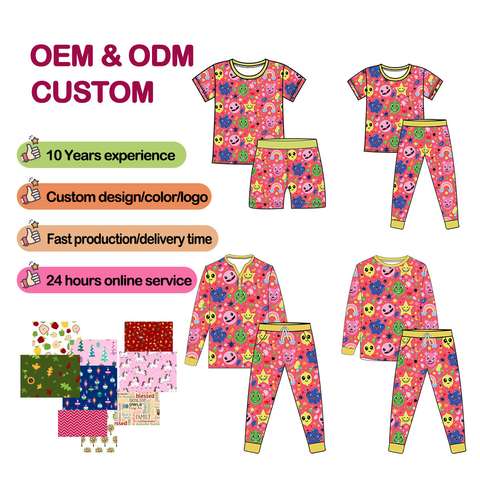
| Customization | OEM |
| Lead Time | 40 Days |
- Sustainability: Bamboo is a renewable resource with a minimal environmental footprint. Its fast growth rate and low water requirements make it an eco-friendly choice for clothing manufacturers seeking sustainable alternatives.
- Comfort and Softness: Bamboo fibers are naturally soft and smooth, providing superior comfort for children’s sensitive skin. Combined with the right GSM and fabric density, bamboo pajamas ensure optimal sleep conditions.
- Breathability and Moisture-Wicking: Bamboo fabric has excellent breathability and moisture-wicking properties, making it ideal for children who tend to sweat during sleep. These features help regulate body temperature and promote restful sleep.
- Hypoallergenic Properties: Bamboo is naturally antibacterial and resistant to allergens, which makes it perfect for children with sensitive skin or allergies. This feature holds significant appeal for health-conscious parents and businesses that prioritize safety.
- Versatility: Bamboo pajamas can be tailored to all seasons, ranging from lightweight options for summer to denser, insulated options for winter. Their versatility makes them a popular choice among manufacturers aiming to serve diverse markets.
Considerations for B2B Buyers
When sourcing bamboo pajamas for children, B2B buyers should assess several factors to ensure product quality and business profitability:
- Certifications: Ensure that the bamboo fabric is certified for sustainability and safety standards, such as OEKO-TEX® or organic certifications.
- Material Composition: Pure bamboo fabrics are often blended with other fibers, such as organic cotton or spandex, for added durability and stretch. Ensure the material composition aligns with your target market’s preferences.
- Manufacturing Partner Capabilities: Choose manufacturers equipped with advanced industrial machinery that ensures GSM and density consistency, as well as the ability to scale production according to order volume.
- Customization: Many B2B buyers require unique designs, patterns, or branding in the final product. Partner with manufacturers offering flexible customization options to differentiate your offering in the market.
- Lead Times: For B2B buyers, timely delivery is essential, especially when fulfilling seasonal demands. Collaborate with suppliers capable of maintaining efficient production cycles without compromising quality.
Ultimately, buyers must ensure that the chosen supplier adheres to all regulatory requirements for children’s sleepwear, including flammability standards, labeling requirements, and chemical restrictions.
Bamboo pajamas for children represent a growing segment in the sustainable apparel industry. Understanding technical parameters such as GSM and fabric density, as well as the industrial machinery involved, allows businesses to make informed decisions that reflect their commitment to quality and environmental responsibility. By focusing on these aspects, B2B buyers can deliver premium bamboo pajamas that meet consumer expectations for comfort, durability, and eco-conscious living. With the right partnerships and manufacturing processes, businesses can successfully tap into this niche and provide exceptional sleepwear products for children.