Cpsia Compliant Bamboo Plus Size Womens Pajamas Bespoke Supplier
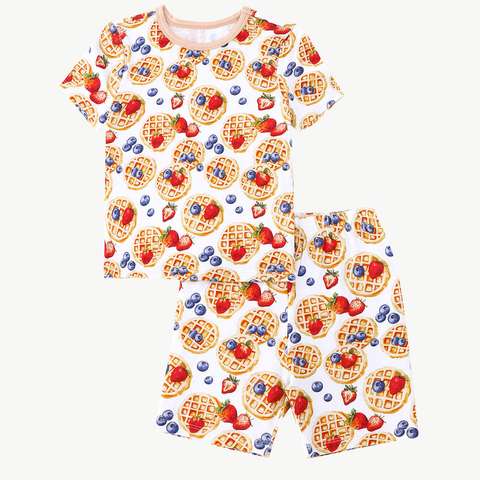
Bamboo Plus Size Women’s Pajamas: The Intersection of Fabric Science and Industrial Machinery
The growing demand for sustainable and comfortable garments, particularly for plus-size women, has placed bamboo fabric center stage. Bamboo-derived textiles, known for their softness, breathability, and eco-friendliness, are increasingly preferred for loungewear and pajamas. Specifically for plus-size garments, the technical details—such as GSM (grams per square meter), fabric density, and the role of industrial machinery—are critical to manufacturing high-quality pajamas. In this article, we’ll unpack the nuances of producing bamboo plus-size women’s pajamas, focusing on the engineering and manufacturing aspects that ensure comfort, durability, and scalability.
The Role of GSM in Bamboo Pajama Fabric Performance
The term GSM, or grams per square meter, refers to the weight of fabric per square meter and is a crucial factor in textile manufacturing. For bamboo pajamas, particularly in the plus-size category, selecting the optimal GSM ensures the perfect balance between comfort, durability, and breathability.
A GSM range of 160 to 220 is often chosen for garments like pajamas. Low GSM values (e.g., beneath 160) produce lightweight fabrics that are airy and smooth but may lack durability and structure—two critical factors for plus-size apparel. Conversely, high GSM levels (above 220) can result in thicker fabric that may compromise breathability and feel too heavy for loungewear.
For bamboo plus-size pajamas, manufacturers typically gravitate toward a sweet spot of 180 to 200 GSM. This range offers enough fabric density to withstand stretching and wear in plus-size garments while maintaining breathability and comfort. The precise GSM value is determined by factors such as intended usage (e.g., warmer climates may require lower GSM values) and the blend ratio, if other materials like spandex are mixed with bamboo.
Fabric Density: Quality Assessment Beyond GSM
While GSM measures weight, fabric density evaluates how tightly the fibers or yarns are woven or knitted together. This characteristic significantly impacts garment performance in terms of opacity, drape, and elasticity—crucial for plus-size garments.
Bamboo fabric typically utilizes a variety of knitting techniques, such as jersey or interlock, to achieve density levels suited for pajamas. Interlock knit fabrics, for example, provide greater thickness and stretch retention, making them ideal for more structured pajamas. Jersey knits, on the other hand, offer lighter density and flexibility, making them better for flowy and softer loungewear designs.
An evenly distributed fabric density is imperative. Poor stitching or discrepancies in yarn tension can lead to irregularities in the fabric’s stretch and appearance, which are more noticeable in larger garment sizes. Implementing advanced machinery, capable of ultra-precise tension control and seamless fabric monitoring, is critical to ensuring consistency in fabric density and quality when scaling production.
Industrial Machinery Advancements for Bamboo Pajama Production
The complexity of manufacturing bamboo plus-size pajamas lies not only in fabric selection but also in selecting the right machinery. The softness and elasticity of bamboo fibers demand specialized equipment to handle the material without damage while achieving scalability for mass production.
Textile Knitting Machines
High-quality knitting machines, such as circular knitting machines, are widely employed in the production of bamboo pajamas. These machines provide precise control over stitch density, enabling manufacturers to meet the desired GSM specifications. Advanced models often include fully automated features, reducing error margins in stitch uniformity—a vital component for plus-size apparel, where inconsistencies in elasticity can affect fit.
Fabric Cutting and Seaming Equipment
In addition to knitting, fabric processing for bamboo pajamas relies on accurate cutting and seaming machinery. Laser-guided cutting machines are preferred for bamboo fabrics, as they reduce fraying issues and produce clean cuts. Seamless sewing machines, equipped with stretch-resistant thread, guarantee the structural integrity and comfort of plus-size garments without compromising the fabric’s flexibility.
Moisture and Heat Control in Machinery
Given bamboo’s notable moisture-wicking properties, processing the textile often involves machinery designed to handle humidity efficiently. For example, specialized moisture-removal dryers and tension-controlled irons are employed in the finishing stages to maintain fabric texture and shape during various thermal processes. These fine-tuned operations also ensure that the fiber retains its softness and breathability while achieving the dimensional stability required for plus-size fashion.
Sustainability and Efficiency in Bamboo Fabric Manufacturing
Bamboo, as a raw material, is inherently sustainable due to its rapid growth and lower water consumption compared to traditional crops like cotton. However, the processing of bamboo into fabric involves chemical-intensive steps when converting it into bamboo viscose.
| Fabric Type | Pima Cotton |
| Compliance | OEKO-TEX 100 |
| Customization | ODM |
| Lead Time | 22 Days |
To align with eco-friendly practices, many manufacturers now invest in closed-loop systems for bamboo processing. These systems reuse chemicals and minimize waste. Additionally, industrial machinery equipped with precision-dosing systems ensures that the exact required quantities of solvents are used, minimizing excess.
Efficient machinery also helps mitigate power and resource consumption during manufacturing. For instance, high-speed knitting machines with optimized torque settings reduce energy use while increasing productivity. These technological advancements allow manufacturers to meet both sustainability goals and consumer demand for eco-conscious plus-size pajamas.
Implications for the B2B Market
The B2B market for bamboo pajamas, especially in the plus-size category, is gaining momentum as more retailers and brands prioritize inclusivity and sustainability. From a supplier’s perspective, understanding the technical specifications of GSM, fabric density, and the role of industrial machinery enables them to deliver superior products tailored to client requirements.
For instance, offering potential clients data sheets that detail GSM variability, tensile strength, and production capabilities can set manufacturers apart in a competitive industry. , integrating sustainable practices and showcasing energy-efficient machinery investments can help suppliers appeal to socially conscious clients who want to emphasize eco-friendly values in their branding.
Customizability is another key factor. Modern machinery allows suppliers to offer tailored solutions, such as incorporating specific GSM values for niche climates, adjusting fabric density based on end-use, or experimenting with different bamboo blends. Appealing to the unique needs of B2B clients—retailers, fashion lines, or even hospitality companies—reinforces a manufacturer’s position in the market.
Concluding Thoughts: Engineering the Ideal Bamboo Plus-Size Women’s Pajamas
The production of bamboo plus-size women’s pajamas is a sophisticated interplay of material science and machinery engineering. By leveraging optimal GSM ranges, controlling fabric density, and employing state-of-the-art machinery, manufacturers can create garments that excel in comfort, durability, and sustainability. For stakeholders in the B2B space, understanding these technical layers not only highlights opportunities for innovation but also ensures alignment with the growing market demands for inclusivity and eco-consciousness.