Custom Childrens Baby Clothes Gots Organic Wholesale
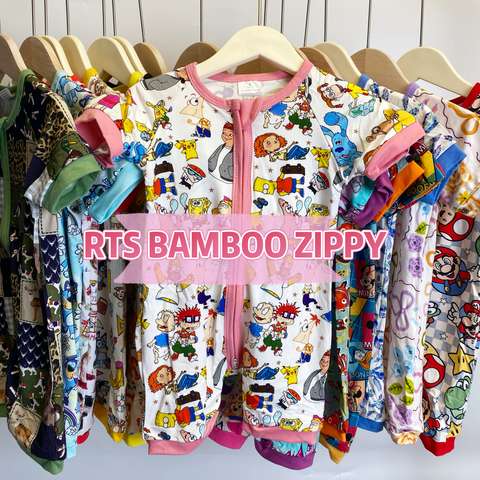
Engineering Excellence in Children's Baby Clothes
In the world of children's baby clothes, fabric quality and durability are paramount. As markets expand globally, manufacturers are tasked with balancing delicate comfort with resilient design. This article delves into three vital aspects pivotal to producing high-quality baby garments: GSM (Grams per Square Meter), fabric density, and the use of advanced industrial machinery.
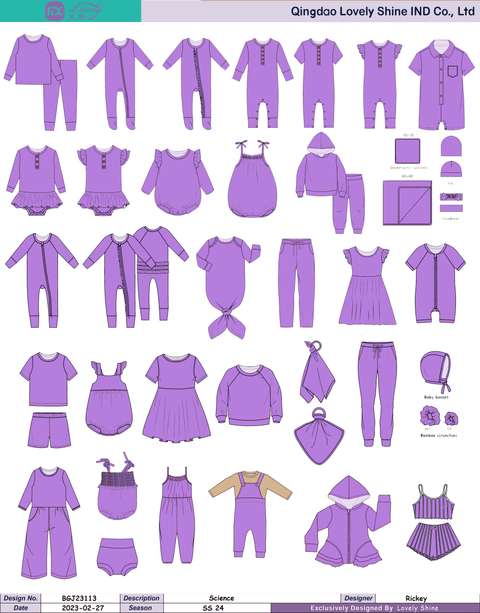
Understanding GSM and Its Impact on Baby Clothes
GSM, or Grams per Square Meter, is a standard measurement of fabric weight, highly influential in the design and function of children's clothing. For baby clothes, achieving an optimal GSM is crucial; it ensures comfort without compromising on durability. Fabrics with a lower GSM (between 150 and 200) are generally softer and more suitable for sensitive baby skin. Conversely, higher GSM fabrics may provide increased durability but often at the cost of reduced comfort.
A critical balance is essential. Manufacturers need to select materials that withstand frequent washing and maintain structural integrity without causing discomfort. The choice of fabric with the appropriate GSM can influence the end-user's experience significantly. , bamboo and organic cotton are popular choices in baby clothes, offering a perfect balance of a soft touch and substantial durability, commonly situated around 180-220 GSM.
The Role of Fabric Density in Baby Garment Quality
Fabric density pertains to the closeness of the weave or knit, impacting the garment's breathability, elasticity, and durability. For example, densely woven fabrics, while providing excellent durability, may lack the necessary breathability for baby apparel. This is particularly critical in baby clothes, where overheating can pose health risks.
In manufacturing processes, achieving an ideal fabric density involves selecting the appropriate yarn count and weave type. For baby clothes, a jersey knit or interlock knit is frequently used due to its suitable density, providing a balance between elasticity and durability, conducive for active infants and toddlers. The balance between these factors helps maintain the garment's shape while ensuring it can endure the rigors of everyday use.
Advancements in Industrial Machinery for Baby Clothes Manufacturing
The progression in industrial machinery has substantially enhanced the efficiency and quality assurance in the production of children's wear. Modern textile machines, including advanced knitting and sewing machines, enable precision control over fabric production, ensuring consistent quality in every batch.
Automated systems, such as Computer Numerical Control (CNC) machines and robotic arms, play a crucial role in precision cutting and stitching processes. These advancements reduce material wastage and improve the consistency of seams which is critical in maintaining comfort and durability. , cutting-edge dyeing machines have improved the sustainability of the production process by minimizing water and chemical usage, which aligns with increasing consumer demands for eco-friendly products.
Implementing such advanced machinery in the production line enhances the productivity and quality of baby clothes, meeting the high safety and quality standards required for children's garments.
Future Trends in the Children's Baby Clothes Industry
The future of the baby clothing industry is geared towards sustainability, innovation, and technological integration. With consumers becoming more environmentally conscious, the demand for organic and sustainably sourced materials continues to rise. This has propelled advancements in fabric science, with bi-engineered textiles gradually entering the market.
Additionally, the adoption of IoT (Internet of Things) in manufacturing processes provides real-time monitoring and insights, further optimizing production and supply chain efficiency. The integration of AI (Artificial Intelligence) in design processes can lead to personalized baby garments, catering to specific customer preferences while maintaining high manufacturing standards.
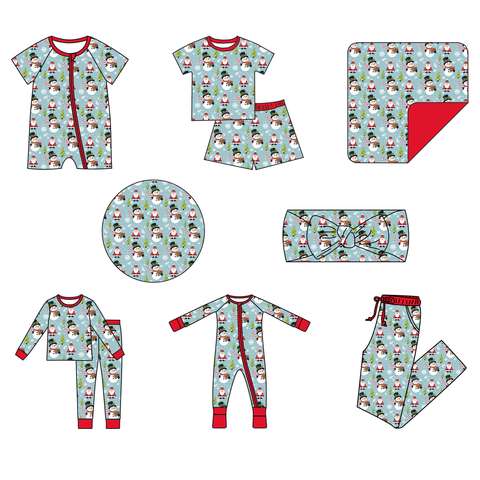
The combination of these technological advancements with an acute focus on GSM, fabric density, and precision machinery, positions manufacturers to meet and exceed market expectations, ensuring safe, comfortable, and durable clothing for infants and young children.
| Fabric Type | Organic Bamboo |
| Compliance | ASTM F963 |
| Customization | Custom |
| Lead Time | 37 Days |
, the production of children's baby clothes involves a meticulous balance of engineering and design. By focusing on key technical aspects like GSM, fabric density, and harnessing state-of-the-art industrial machinery, manufacturers can deliver superior baby garments that fulfill consumer desires for quality, safety, and sustainability.