Oekotex 100 Solid Bamboo Zipper Romper Gots Organic Wholesale
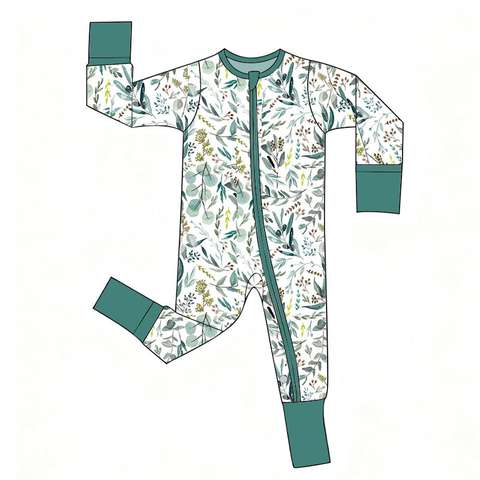
The Engineering and Manufacturing of Solid Bamboo Zipper Rompers
In the textile and garment manufacturing industry, the increasing demand for sustainable and durable materials has spotlighted bamboo fabric as a revolutionary alternative. Solid bamboo zipper rompers combine sustainability, practicality, and comfort, making them highly sought after in both retail and wholesale markets. However, the technical backbone of these products is as fascinating as their end-user appeal. This article explores the technical intricacies involved in the production of solid bamboo zipper rompers, with a special focus on GSM (grams per square meter), fabric density, and the role of industrial machinery in achieving both precision and scalability.
Understanding Bamboo Fabric: Composition and Key Properties
Bamboo fabric is derived from the pulp of bamboo plants through mechanical or chemical processes. Mechanical extraction involves crushing bamboo into cellulose fibers, while chemical extraction involves solvents that break down the bamboo into viscose rayon, a regenerated cellulose fiber. The result is a fabric renowned for its softness, durability, breathability, and eco-friendliness.
These key attributes make bamboo the perfect material for babywear and activewear, where comfort and skin safety are paramount. However, a robust understanding of GSM and fabric density is crucial to strike the right balance between softness and durability, particularly in products like solid bamboo zipper rompers, which undergo significant wear and tear during use.
The Importance of GSM and Fabric Density in Bamboo Zipper Rompers
GSM, or grams per square meter, is a pivotal parameter in the textile industry. It quantitatively assesses the weight of fabric and indirectly influences its thickness, durability, and application. In the context of bamboo zipper rompers, a GSM range of 180 to 230 is often ideal. Fabrics below 180 GSM may become too light and prone to wear, especially with the stress of zippers, while fabric above 230 GSM could compromise breathability and comfort.
Fabric density, on the other hand, refers to how tightly the bamboo fibers are woven or knitted together. While GSM measures weight, density evaluates the structural integrity and texture. Higher density fabrics tend to resist pilling, stretching, and tearing, making them better suited for rompers that feature functional elements like zippers. A tighter density typically complements a moderate GSM to achieve a harmonious balance between functionality and comfort.
Striking the optimal GSM and density requires scientific precision during the manufacturing stage, as variations can impact not only the garment’s performance but also its perceived quality in the B2B marketplace.
Industrial Machinery for Bamboo Fabric Production
The production of bamboo fabric for solid zipper rompers involves a series of industrial processes, each facilitated by specialized machinery designed for precision, scalability, and quality control. Let us explore the critical stages:
1. Fibrous Extraction and Pulp Treatment
The raw bamboo plant material is crushed and treated to yield cellulose fibers. While mechanical processes employ crushing and enzymatic retting, chemical processes often involve solvents such as sodium hydroxide to produce high-quality viscose. High-capacity pulping machines are integral to these operations, ensuring consistent supply and uniformity in fiber quality.
2. Spinning and Yarn Production
Once the bamboo fibers are ready, they are spun into yarn through industrial spinning machinery. Automated ring spinning machines or open-end spinning systems are commonly employed here. Variables such as yarn twist and diameter are carefully calibrated for the intended GSM of the final fabric. Bamboo yarns used for rompers often undergo additional treatments for anti-pilling and moisture-wicking properties.
3. Knitting or Weaving
The manufacturing process moves to knitting or weaving machines, depending on the design specification. Circular knitting machines are preferred for bamboo fabric intended for baby rompers, as they produce smooth and stretchable textiles with uniform density. Conversely, jacquard looms or air-jet looms are used for woven fabrics, which offer stability and a firmer structure. The machinery operates under strict tension and speed controls to achieve the desired weight and density metrics.
| Fabric Type | Organic Bamboo |
| Compliance | CPC Certified |
| Customization | OEM |
| Lead Time | 15 Days |
4. Finishing and Dyeing
Bamboo fabrics, after knitting or weaving, go through a final finishing stage that includes pre-shrinking, dyeing, and setting. Eco-friendly dyes and finishes are key to maintaining the environmental appeal of bamboo rompers. Advanced continuous dyeing machines ensure uniform color application, while stenter machines set the fabric width and GSM properties precisely.
Key Challenges in Manufacturing Bamboo Zipper Rompers
Manufacturing bamboo zipper rompers poses unique challenges compared to conventional fabrics. These include:
1. Durability vs. Softness
While consumers demand softness, rompers must also endure frequent washing and mechanical stress from the zipper mechanism. Achieving the desired GSM and density balance is therefore critical, as overly soft fabric may compromise durability.
2. Stress Point Reinforcement
Zippers, often placed along the torso area, act as stress concentrators. Reinforcement at zipper seams is essential, requiring precision stitching with semi-automatic or fully automated overlock and coverstitch machines. The threads used in this process are often high-tenacity polyester or bamboo-blended fibers for better resilience.
3. Eco-Friendly Manufacturing Practices
Sustainability is a key selling point for bamboo rompers. Manufacturers must implement low-impact dyeing processes, minimize water usage, and adopt green energy solutions to align their production goals with environmentally conscious B2B clients.
Advantages of Using Bamboo Fabric in Zipper Rompers
Businesses investing in bamboo zipper rompers gain significant competitive advantages:
- Sustainability: Bamboo cultivation requires no pesticides and less water compared to cotton, making it an eco-friendly raw material.
- Hypoallergenic and Anti-bacterial: Bamboo's natural properties make it an excellent choice for sensitive skin and babywear.
- Thermal Regulation: Bamboo fabrics are breathable and regulate body temperature more effectively than synthetic materials.
The manufacturing of solid bamboo zipper rompers is a testament to the synergy between precision engineering and sustainable practices. From the careful calibration of GSM and fabric density to the integration of advanced industrial machinery, every step impacts the final product's performance and marketability. For B2B clients, understanding these technical aspects is critical to making informed procurement decisions and delivering superior end-products to consumers.
Bamboo zipper rompers are more than just garments; they are a convergence of innovative material science, meticulous engineering, and a commitment to environmental stewardship. As demand grows, investing in advanced machinery, robust quality controls, and sustainable practices will be the cornerstone of success for manufacturers and distributors in this thriving market.