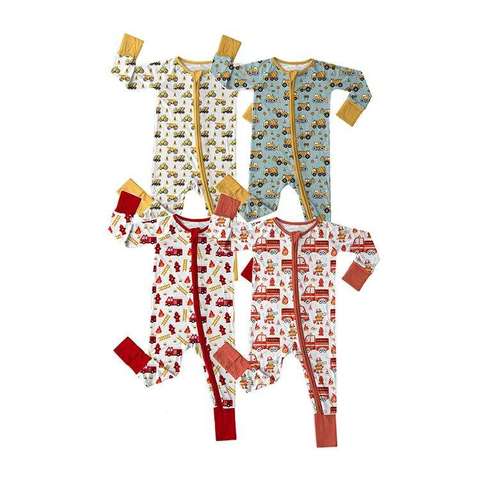
Private Label Rompers Custom Design Bamboo Pjs Sets Baby Onesize Kids Jumpsuit Wholesale Custom Print Double Zipper Rompers Toddler 03 Bamboo Romper Cpsia Compliant Wholesale
Engineering Excellence Behind Bamboo Rompers for Toddlers
The world of children's apparel is ever-evolving with demand for sustainable, customizable, and high-quality clothing solutions. One standout product in this market is the custom-designed bamboo rompers. These garments not only offer comfort and durability but also achieve this through careful selection of materials, technological advancements in industrial machinery, and innovative customization options for businesses. This article will delve into critical manufacturing components, focusing on fabric density, GSM (grams per square meter), and the state-of-the-art industrial machinery used to revolutionize this sector.
Understanding GSM and Fabric Density
For custom rompers, fabric quality is a cornerstone. Grams per square meter (GSM) and fabric density are two essential parameters that provide invaluable insight into the durability, flexibility, and comfort of the final product. When selecting bamboo-based fabrics for toddler use, understanding GSM helps maintain a balance between softness and structural integrity.
- GSM for Bamboo Fabrics: Bamboo-based fabrics typically range from 150 to 300 GSM, offering choices for lightweight or premium thick rompers. For baby rompers, an optimum GSM between 180 and 230 provides a soft, breathable, and durable fabric—perfect for a baby's sensitive skin.
- Impact of Fabric Density: Density relates to how tightly the threads are woven or knitted, impacting the garment's stretch and wear resistance. Double-layered bamboo fabric is often preferred for kids' rompers, yielding higher density without compromising breathability.
Industrial Machinery: Precision and Scalability
Manufacturing these custom bamboo rompers demands precision-focused, high-output industrial machinery. From knitting and weaving to printing and sewing, various automated processes ensure scalability, accuracy, and consistent quality. Here are the technical aspects related to industrial machinery involved:
- Bamboo Weaving and Knitting Machines: These advanced machines tailor the bamboo fibers into lightweight or heavyweight textiles, catering to specific GSM and other requirements. Single-knit and double-knit configurations are used based on density expectations, designed to withstand frequent washing and wear.
- High-Speed Printing Machines: Custom prints are often executed through dye-sublimation or digital printing technologies. Dye-sublimation allows the infusion of vibrant colors while retaining the fabric’s natural breathability.
- Computerized Sewing Machines: Double-zippered designs are a neat feature of these rompers, allowing parents easy access. This is achieved through precision-guided computerized sewing machines capable of flawless execution, even on highly stretchable bamboo fabric.
The Double Zipper Design: A Technical Marvel
The dual-zipper feature in baby rompers is popular due to its ergonomic benefits. Engineered zipper strips with robust stitching techniques ensure both durability and safety:
- Material Integration: The zipper tracks are typically integrated into the fabric without disturbing its elasticity or softness. Specialty elastic stitching machines are used alongside flatlock or overlock sewing techniques for a seamless finish.
- Safety Standards: Zipper materials are tested under rigorous standards to ensure they are nickel-free, hypoallergenic, and child-safe. These strict approvals are non-negotiable for toddler-focused products.
Customization Possibilities for B2B Businesses
In a competitive B2B market, businesses catering to a global audience are actively exploring unique product variations. Customization of bamboo rompers for toddlers is made possible via an array of design options tailored to varying specifications:
Custom Prints and Branding
One popular customization option is adding custom prints to the rompers. With advances in digital printing technologies, businesses can choose from various designs, patterns, and colors for personalized baby jumpsuits:
- All-over printing: Achievable with high-speed fabric printing equipment designed for small-scale or mass production.
- Logo-focused customization: Precision logo placement, with high-definition visuals, caters to private labeling or exclusive collections.
Size Adjustment and Onesize Fit
Custom baby jumpsuits often cater to a range of sizes, such as 0 to 3 years. Industrial grade patterning machines and software ensure accurate size grading across the range. Bamboo fabric’s natural elasticity makes it an exceptional option for onesize fits, accommodating the growth of babies over months of usage. Combined with adjustable double zippers, this ensures functionality for infants transitioning to toddlers.
Eco-Sustainability: A Value Proposition
Bamboo fabric significantly removes carbon footprint concerns associated with manufacturing. The sustainable nature of bamboo textiles stems from:
- Rapid Regrowth: Bamboo regenerates naturally with minimal water demands, making it a highly renewable resource.
- Eco-Friendly Processing: Large-scale mechanical processing machinery ensures fibers are harvested and converted without harming the environment.
- Compostable Material: After a romper’s lifecycle, the fabric is biodegradable, leading to zero waste post-consumption.
Wholesale Manufacturing and Scalability Benefits
For businesses aiming to penetrate the baby apparel market, opting for wholesale manufacturing of custom-designed bamboo rompers can offer evident advantages. Leveraging cutting-edge machinery and automation, manufacturers can accommodate orders ranging from small boutique batches to large commercial volumes.
Lead Time Optimization
With advancements in textile manufacturing machinery, lead times are significantly reduced without compromising quality. Automated cutting and sewing machinery ensures consistent production speeds for bulk orders, streamlining processes from raw material preparation to garment completion.
Cost-Efficiency
Economies of scale achieved through wholesale production make custom rompers competitively priced. Additionally, reusable water systems in dyeing and printing stages minimize utility costs and lower expenses.
Global Logistics and Distribution
Most manufacturers optimize logistics networks for global clients, ensuring smooth supply chain management. This includes tailored packaging options for custom designs, further enhancing the clientele experience and reducing retail handling efforts for businesses.
Concluding Remarks
Today's B2B market thrives on innovation, efficiency, and customization, particularly in the baby apparel industry. The engineering behind bamboo rompers for toddlers integrates advanced concepts of GSM, fabric density, and industrial manufacturing technologies to deliver a sustainable, high-quality product. As businesses continue to explore personalized offerings, bamboo-based baby rompers remain a flagship choice, merging functionality with environmental awareness.
| Fabric Type | Pima Cotton |
| Compliance | OEKO-TEX 100 |
| Customization | ODM |
| Lead Time | 24 Days |
For manufacturers, adopting scalable and advanced industrial machinery is key to addressing the growing demand for customized infant wear solutions. Emphasizing quality, safety, and sustainability in design, custom rompers inspire confidence among retailers and parents alike, setting benchmarks not only in baby apparel but also in manufacturing innovations.