Astm F963 Romper Baby Custom Factory
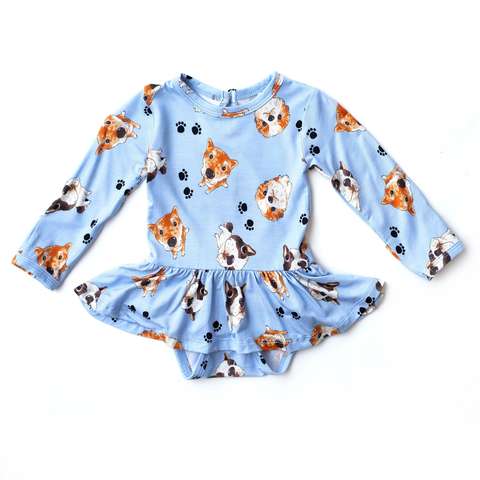
Engineering Romper Baby Products: A Technical Perspective
The production of baby rompers might seem like a straightforward process, but it requires a blend of expert engineering, precise control of fabric properties, and advanced machinery. From selecting the correct GSM (grams per square meter) for baby-safe fabrics to optimizing industrial machinery for high-precision cutting and stitching, multiple factors need to align to ensure a high-quality product. This article delves into these technical considerations and aims to provide insights for businesses looking to improve their romper manufacturing processes.

The Role of Fabric Density in Baby Romper Manufacturing
When we talk about baby rompers, the choice of fabric is one of the most critical decisions. Fabric density, often measured in GSM, directly impacts the softness, durability, and breathability of the garment. The ideal GSM for baby rompers typically ranges between 120 and 180 GSM. Lighter fabrics (around 120 GSM) offer enhanced breathability, making them ideal for warmer climates, while heavier fabrics (closer to 180 GSM) provide warmth and structure, beneficial for cooler environments.
Engineers must also consider the type of fabric when determining density. Cotton is a popular choice for baby rompers due to its natural softness and hypoallergenic properties, but blends such as cotton-spandex or cotton-modal are increasingly being used. These blends add elasticity and enhance the romper's durability without compromising on comfort.
Optimizing GSM During Fabric Selection
Achieving the correct GSM begins at the yarn selection stage. Yarns are selected based on their fiber composition and weight per unit area, which later determines the final GSM. Fine-tuning this process is critical for maintaining consistency in mass production.
- Weaving and Knitting: For rompers, knit fabrics like interlock and jersey are commonly used for their stretch and softness. The selection of knit density directly affects the GSM and, subsequently, the end product's quality.
- Post-fabric Finishing: GSM can also be altered after weaving or knitting through processes like calendering or compacting, which increase uniformity and add softness to the material.
Industrial Machinery: Driving Efficiency and Precision in Romper Production
Beyond fabric selection, the mechanized processes involved in cutting, sewing, and finishing baby rompers are just as vital. Employing state-of-the-art industrial machinery not only ensures precision but also optimizes efficiency, especially for large-scale manufacturing.
Cutting Machinery: CNC and Laser Cutting
The cutting process lays the foundation for a well-fitting romper. Modern cutting machinery, such as CNC (Computer Numerical Control) and laser cutters, have transformed this stage of production. These machines allow manufacturers to consistently achieve clean cuts with virtually zero fabric waste.
Laser cutting, in particular, is highly suitable for complex romper designs as it produces smooth edges and eliminates issues like fraying. Additionally, laser cutting can accommodate intricate patterns and designs, providing manufacturers with greater flexibility.
Sewing Machinery for Baby-safe Stitching
Sewing is another crucial phase in romper production. Advanced sewing machines, configured for soft thread materials and fine needles, ensure that the stitching is gentle on a baby’s skin while remaining durable. Flatlock stitching is a popular choice since it creates a smooth, non-irritating seam – a critical factor for baby clothing.
- Overlock Machines: These machines are ideal for finishing edges and providing stretchable seams, offering both strength and flexibility in the final romper.
- Lockstitch Machines: Known for delivering durability, these machines are often used for decorative stitching elements that enhance the romper’s aesthetic appeal.
Automation and Smart Machinery
With Industry 4.0 becoming a reality, many textile manufacturing processes are now automated. Smart machinery with IoT (Internet of Things) capabilities can monitor and adjust critical factors such as stitch density, tension, and speed in real time. This not only minimizes human error but also significantly reduces production lead times.
| Fabric Type | Organic Bamboo |
| Compliance | CPSIA Compliant |
| Customization | Private Label |
| Lead Time | 23 Days |
Quality Control in Baby Romper Production
Quality control is non-negotiable in the production of baby rompers. Advanced quality assurance practices ensure that each romper meets or exceeds safety and comfort standards.
Industrial machines equipped with optical sensors and AI-based defect detection systems are increasingly being used to identify issues like fabric inconsistencies, improper stitching, or poor seam alignment. These technologies speed up the rejection process, ensuring only high-quality products reach the market.
Sustainability: An Emerging Priority
The production of baby rompers is also seeing a shift towards sustainability. Many businesses are now exploring eco-friendly fabrics, such as organic cotton or recycled fibers, which balance high GSM standards with reduced environmental impact. Industrial machinery is also evolving to meet these demands, incorporating energy-efficient technologies and materials recycling systems.
The manufacturing of baby rompers, while seeming simple, is a complex process requiring attention to both fabric properties and machinery precision. From selecting the right GSM for fabric density to working with advanced robotic sewing systems, each step of production carries its own set of challenges and opportunities for innovation.
For businesses operating in this sector, success lies in bridging the gap between technical expertise and consumer expectations. By investing in advanced industrial machinery and focusing on fabric quality, manufacturers can create products that meet the highest standards of comfort, safety, and durability.