Cpsia Compliant Family Pajamas Bamboo Oekotex 100 Supplier
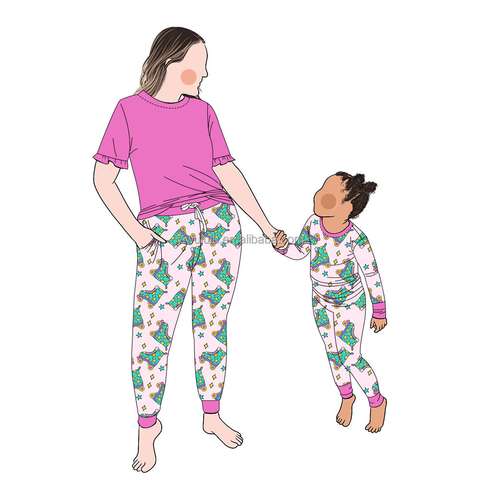
The Engineering Behind Bamboo Family Pajamas
Bamboo-based textiles are rapidly gaining popularity across the global apparel industry, and family pajamas represent one of their many innovative applications. However, the production of bamboo fabric isn’t as straightforward as it may appear. For manufacturers, maintaining fabric consistency through precise GSM (grams per square meter), fabric density, and leveraging the right industrial machinery is crucial to ensuring durability, comfort, and scalability. This article delves into the engineering and textile production nuances associated with creating sustainable and high-quality bamboo pajamas for families.
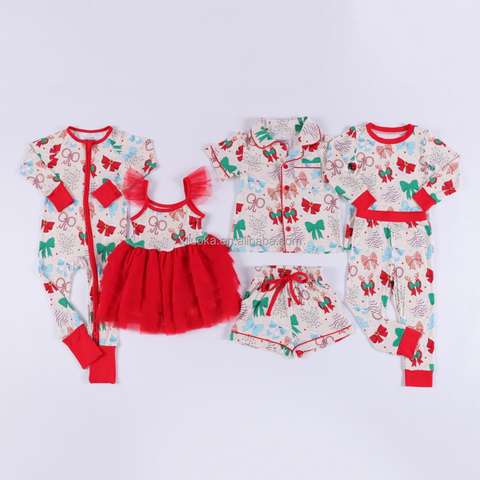
Understanding GSM and Its Importance in Bamboo Pajamas
The term GSM, or grams per square meter, is a critical measure of fabric weight and thickness. For family pajamas, GSM plays an integral role in determining comfort, breathability, and durability. Depending on the intended environment—whether for winter warmth or summer cooling—GSM must be adjusted meticulously during the production process.
For bamboo family pajamas, an ideal GSM typically ranges between 160 to 250 GSM. Lower GSM fabrics (160–180) offer better breathability, making them ideal for lightweight pajamas suited for warmer climates. Conversely, higher GSM (200–250) provides a thicker, more robust fabric that lends itself to colder conditions while still leveraging bamboo’s natural moisture-wicking properties.
Achieving the desired GSM requires careful control over yarn selection and weaving techniques. Bamboo fibers, known for their fineness and softness, must be woven into a uniform structure to avoid uneven density. Variations in GSM can lead to inconsistency in fabric properties, directly affecting the comfort and aesthetic quality of the final product.
The Role of Fabric Density in Quality and Performance
While GSM measures the weight of the fabric, fabric density refers to the tightness of the textile weave or knit. For family pajamas, especially those made from bamboo-derived fabrics, fabric density must strike a balance between softness and durability.
Bamboo's natural fibers are uniquely advantageous as they can be woven into high-density fabrics without sacrificing softness. A tightly woven or knit bamboo fabric will reduce pilling, improve elasticity, and offer more durability. This is especially critical for family pajamas, which often endure heavy washing cycles due to their frequent use. As an engineer, ensuring fabric durability involves selecting the optimal weave geometry and adjusting thread interlacing patterns to create a dense yet breathable material.
The density also impacts thermal properties. High-density bamboo fabrics trap more air, offering superior insulation. This makes them highly desirable for winter wear. Meanwhile, lower-density weaves or knits are better suited for summer collections. Manufacturers must carefully test weave tightness and test porosity to meet these demands while maintaining bamboo’s lightweight profile.
Industrial Machinery for Bamboo Pajama Production
Precision textile production for bamboo family pajamas heavily relies on modern industrial machinery, ensuring uniformity and scalability. The unique properties of bamboo, such as its smooth fibers and moisture resistance, require specific engineering processes to optimize production efficiency without compromising quality.
Yarn Production Machines
To develop bamboo fibers ready for textile purposes, the initial process starts with refining raw bamboo. This involves mechanically crushing bamboo stalks followed by enzyme treatment to produce fibers. Advanced spinning machinery like the ring spinner or open-end rotor spinner is utilized to tightly control the twist and tensile strength of the bamboo yarn. Engineers must carefully calibrate the machines to avoid excessive friction, which could compromise bamboo fiber integrity.
Knitting and Weaving Machines
Knitting and weaving machines are pivotal during the fabric creation phase. Circular knitting machines are frequently used in manufacturing bamboo pajamas due to their capability of producing seamless, stretchable fabrics. Additionally, air jet weaving machines are often chosen for their higher efficiency and versatility in handling fine bamboo yarns.
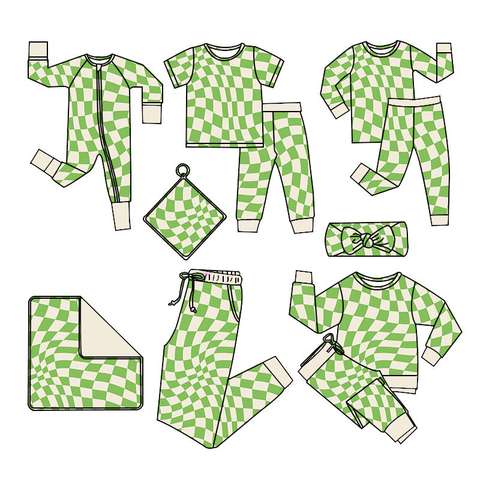
Milling operators must take into account machine tension, temperature, and operating speed so as to ensure a consistent weave or knit pattern. Over-tensioning could stretch bamboo fibers, leading to a loss in elasticity and undesirable variations in fabric density.
Fabric Finishing Equipment
The final step in bamboo fabric processing often involves fabric finishing machines. These are used to apply treatments like anti-pilling, desizing, and softening agents to ensure that the pajamas reach a premium grade. Heat-setting tunnels are also employed to achieve dimensional stability while controlling shrinking. Since bamboo is a delicate fabric, it’s necessary for the machinery to operate within precise temperature and speed settings to avoid any degradation in the material's structure.
Sustainability and Scalability in Bamboo-Based Pajamas
Bamboo is touted as one of the most sustainable textile inputs due to its rapid regrowth, limited need for fertilizers, and low water usage. However, mass production of family pajamas requires manufacturers to integrate efficiency-focused technologies with sustainable practices. This means optimizing machinery to minimize energy consumption while maximizing fabric output.
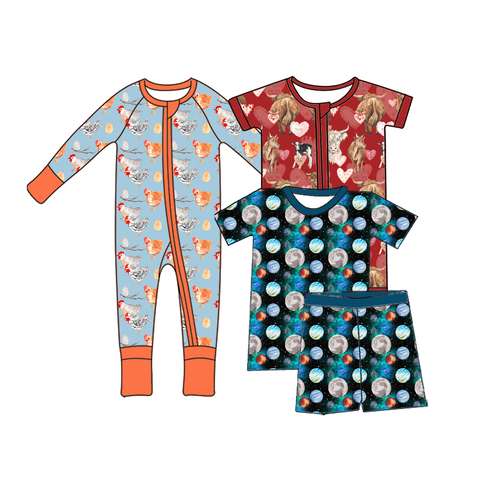
| Fabric Type | Organic Bamboo |
| Compliance | OEKO-TEX 100 |
| Customization | Tailor-made |
| Lead Time | 22 Days |
For instance, the deployment of smart textile machinery equipped with IoT (Internet of Things) sensors can provide real-time feedback on production efficiency, machine wear, and energy usage. These systems help reduce waste while fine-tuning production for optimal output. Additionally, the implementation of closed-loop systems in the chemical treatment of bamboo ensures reduced environmental impact by recycling water and minimizing chemical runoff.
Innovations Driving the Future of Bamboo Pajamas
Advancements in textile engineering continue to push the boundaries in bamboo fabric production. Technologies such as 3D knitting are emerging as game-changers, enabling manufacturers to produce seamless bamboo pajamas with advanced fit mechanisms. , automated defect detection systems powered by AI are being deployed to ensure consistent quality in fabric weaving and knitting.
Another innovation lies in blending bamboo with other natural fibers like organic cotton or elastane. Industrial-grade blending machines ensure that these fibers are distributed evenly, maintaining GSM and fabric density consistency while adding structural resilience.
Finally, the integration of digital twin technology allows manufacturers to simulate the behavior of bamboo fabrics during production and daily use. By modeling wear and tear digitally, engineers can optimize fabric properties and enable longer-lasting bamboo pajamas tailored for family use.
The production of family pajamas using bamboo fabric demands precise engineering considerations. From controlling GSM and fabric density to deploying modern industrial machinery, every step plays a crucial role in achieving a balance of durability, comfort, and scalability. These technical elements, combined with sustainability-focused innovations, position bamboo as a versatile and eco-friendly choice for family apparel. For manufacturers, leveraging advancements in textile machinery and production techniques will be critical in staying competitive in the growing bamboo apparel market.